
Former Air Marshal Nur Khan accused former military ruler Ayub Khan and his generals of telling a 'big lie' to the nation by saying India had provoked the war.
'New Delhi feels that given the internal dynamics in Pakistan and the overwhelming powers wielded by the army, one will have to wait for better times to see any meaningful progress in the India-Pakistan relationship,' says Ambassador G Parthasarthy.

'The only effective defence against a suicide attack is 'pre-emptive' destruction of the attacker,' says Colonel Anil A Athale (retd).

'If only Cariappa/Thimayya/Chaudhari/Manekshaw were given a free hand, there'll be no PoK, the Chinese would have been taught a lesson, 1965 would have slain the Pak demon and in 1971 just another fortnight's fighting after Bangladesh and West Pakistan would have been occupied.' 'No authoritative military account suggests anything remotely like any of these...' '...Chronologies, names, even periods get mixed up, but, never mind, because the point -- strong Army denied by cowardly Congress -- is made.' 'This is where Modi is coming from,' points out Shekhar Gupta.

The International Cricket Council released the provisional squads of the 12 teams for next year's World Cup in Australia and New Zealand on Friday. However, co-hosts Australia and minnows Ireland decided against releasing the provisional list although they submitted 30 names to the parent body within the stipulated deadline.

'Pakistan is full of 'religious entrepreneurs' like Hafeez Saeed who poison the minds of the young so that they can be motivated to become terrorists. They work in concert with the rulers of Pakistan. It is a private-public partnership.'
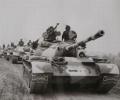
The 1965 war teaches us that war by escalation is a real possibility. Despite clear threats, Pakistan never believed that India will ever cross the international border. In the age of nuclear deterrence, this failure to deter Pakistan is the central lesson of 1965, says Colonel Anil Athale (retd).

The plan hinged on two critical assumptions: India would not be able to replenish supplies quickly to launch a counter-attack. India could not respond in enough strength to dislodge the Pakistanis. Both assumptions would be proved wrong due to the ferocity of the Indian response, reveals former RAW officer Tilak Devasher in his new book, Pakistan At The Helm.

'Indira Gandhi and P N Haksar did not want Pakistan to leave as an embittered foe hell-bent on taking revenge for being humiliated so comprehensively.'
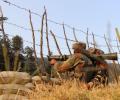
'India has to understand that the permanent state of war that exists between India and Pakistan has to be expected,,' says Colonel Anil A Athale (retd). 'The only way to ensure peace or absence of war is to maintain a militarily-dominant position over Pakistan.'

'Pakistan's recent utterances and tendency to use pinpricks to try our patience appear reminiscent of 1965. We are a strong nation, emerging stronger,' says Lieutenant General Syed Ata Hasnain (retd).

'The creation of Pakistan was integral to Britain's grand strategy.' 'If they were to ever leave India, Britain's military planners had made it clear that they needed to retain a foothold in the NWFP and Baluchistan because that would provide the means to retain control of Iran, Iraq, Kuwait, the UAE, Bahrain and Qatar.'

'The biggest advantage for India was its seasoned and experienced political leadership who had spent decades struggling against the Raj and had spent years behind bars.' 'Not a single prominent leader of the Muslim League spent one day in jail.' 'Gandhiji, Nehru and Sardar Patel were intelligent, shrewd men with their hands on the popular pulse.'
 © 2026 Rediff.com - Advertise with us - Disclaimer - Privacy Policy - Sitemap - Feedback - About us - Terms of use - Grievances